SAND: Raiders of Sophie Beginner Tips
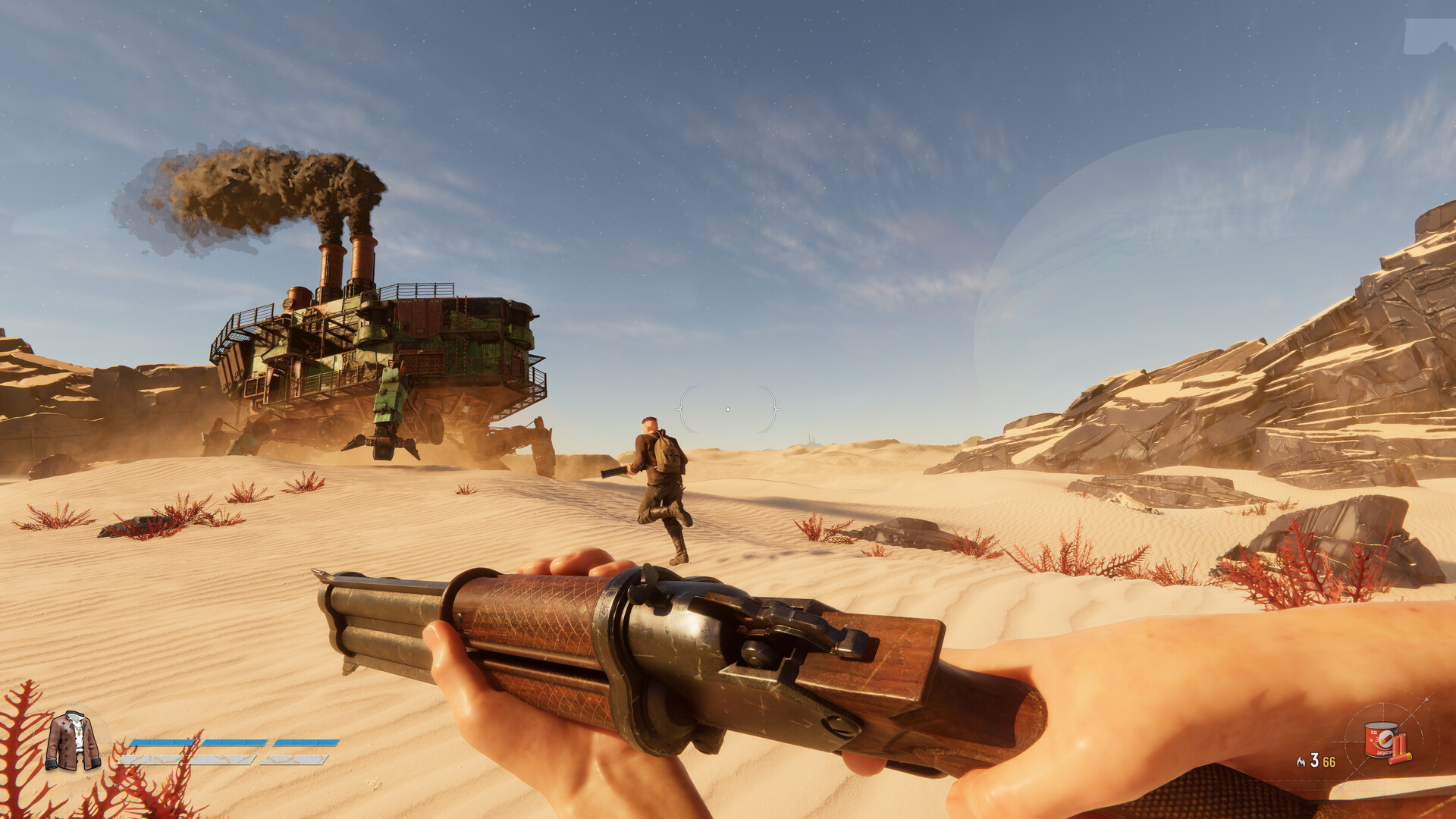
New players should treat the first runs as route learning, not full clears. SAND is a PvPvE extraction game about taking a crew or solo Trampler into a hostile desert, finding value, and leaving before the route collapses. The early mistake is trying to see everything in one run.
The official pitch matters for beginners: the Trampler is not just a vehicle. It is your mobile base, storage, route anchor, and emergency plan. If your walking base is pointed the wrong way, parked too far away, or built only for damage, every loot decision becomes more dangerous.
Simple rule: bank progress early, then extend the route only after you can repeat the first section without losing Trampler control, supplies, or crew spacing.
First 60 Minutes Plan
- Start in Voyage Mode: use the lower-stakes mode to learn movement, boarding, Trampler handling, interaction ranges, and how quickly a calm route becomes noisy.
- Pick one objective per run: choose scouting, resource gathering, artifact checking, weapon testing, or Trampler practice. Do not combine all five while learning.
- Keep the Trampler close enough to matter: before entering a ruin or wreck, ask whether the crew can get back without crossing open danger.
- Loot in passes: first pass is information, second pass is value, third pass is retreat. If the first pass is already messy, skip the second.
- Leave after the first good result: one clean extract teaches more than a long failed run that ends in panic.
Beginner Route Checklist
10 Beginner Rules That Actually Matter
- Value beats volume: do not fill storage with low-impact items if it delays the run after a good pickup.
- Short routes beat heroic routes: a short loop you can repeat is stronger than a long route you barely survive.
- Noise has a cost: long PvE fights, mounted weapons, and slow looting windows can attract rival crews.
- Do not chase every contact: if another crew is not blocking your goal or exit, avoiding them can be the correct play.
- Upgrade for repeatability: early upgrades should make the next three runs safer, not create one impressive clip.
- Keep callouts short: use direction, threat, value, supplies, and exit. Long explanations belong after extraction.
- Respect crew size: solo and duo runs need cleaner exits; larger crews need clearer roles and enough crew-room planning.
- Do not test everything in Storm Dive: learn new builds in Voyage before taking them into higher pressure.
- Review the first mistake: after a loss, identify where the route first became unstable, not only the final death.
- Extend one stop at a time: add one new risk to a route, not three.
What to Upgrade First
Because SAND is still developing through Early Access, exact item balance can change. The safer upgrade logic is stable: prioritize systems that help you reach value, protect value, or extract value. If an upgrade does not serve one of those jobs, it can wait.
Common Beginner Mistakes
The biggest beginner mistake is treating every encounter as mandatory. If a fight costs more healing, time, position, or Trampler durability than the reward can replace, route around it and protect the run.
The second mistake is confusing "I can carry this" with "I should keep going." A run becomes successful when useful value is extracted, not when every container on the route has been opened.
The third mistake is copying a high-risk crew style before learning clean exits. Storm Dive and PvP-heavy routes punish messy communication. Practice the boring parts first: regrouping, turning the Trampler, calling retreat, and leaving without debate.
Beginner FAQ
Should I play solo or with a crew?
Both are supported. Solo play teaches clean decision-making, but you must avoid unnecessary fights. Crew play gives more hands for scouting, looting, driving, and fighting, but only if roles are clear.
Should I start with Voyage or Storm Dive?
Start with Voyage. Storm Dive is better after you can explain your route, your exit condition, and your Trampler job before the run starts.
When is a run already good enough?
When the current loot, scouting information, or build test result would feel painful to lose. That is your signal to move toward extraction.
Next Pages
After this page, read how to extract, route planning, Voyage Mode, and Trampler Editor.
Direct official sources
- Official support FAQ — modes, crew sizes, server caps, controller setup, and recovery after losing all Tramplers/resources.
- Official Steam listing — extraction loop, Trampler systems, and current Early Access state.
- Official known issues — current route and movement warnings.